
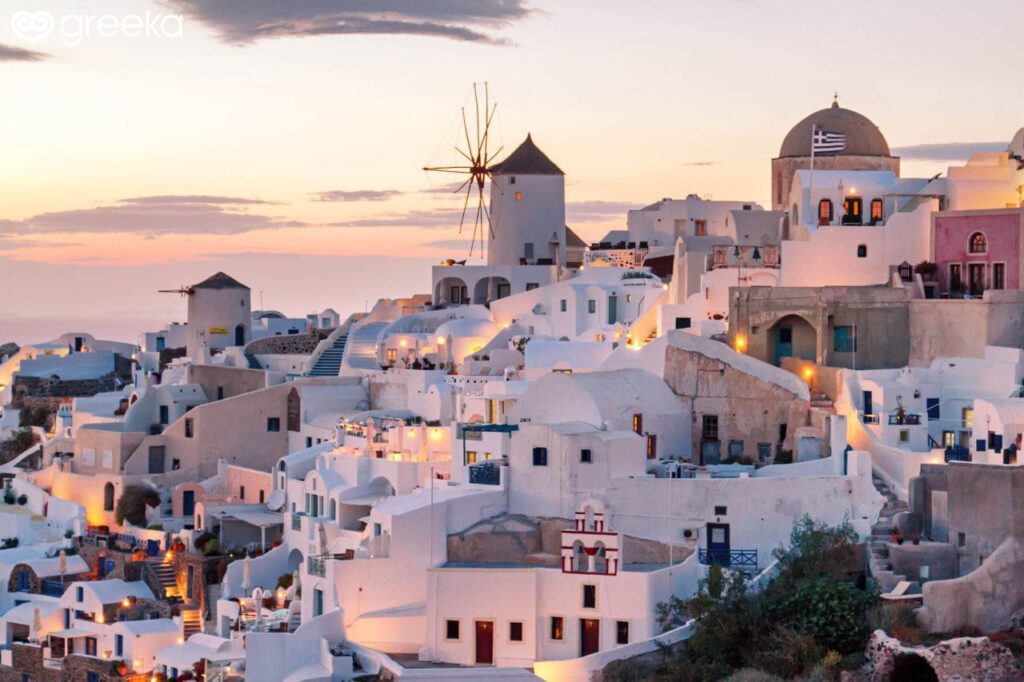
Santorini’s caldera views and blue-domed churches draw millions of visitors a year. Yet the island still hides quiet villages, secret beaches, and trails where the crowds thin out.
Quick answer: The best Santorini hidden gems sit away from Oia’s crowds. Top picks include Pyrgos hilltop village, the medieval Castelli Quarter in Emporio, Akrotiri Lighthouse at sunset, Vlychada (Moon Beach), the wine caves of Megalochori, and the Skaros Rock hike near Imerovigli. Start early and most stay blissfully quiet before 10 a.m.
Why is Pyrgos worth visiting?
Perched on the island’s highest village, Pyrgos feels like an open-air museum. Wander its alleyways, browse small art galleries, and climb to Kasteli Castle for a 360-degree view that rivals any caldera lookout, minus the tour buses.
Pro tip: Visit at dusk for golden-hour photos and fewer footsteps around you.
What makes Emporio and the Castelli Quarter special?
Emporio is Santorini’s largest village, yet it stays under the radar. The pastel Castelli Quarter is a maze of medieval walls built to repel pirates.
Peer around each corner and you will spot flower-draped balconies, blue doors, and cats sunbathing on stone steps.
Why it is a gem: The authentic vibe pairs well with a stop at a village kafeneio for Greek coffee and loukoumades (honey doughnuts).
Where can you watch the sunset away from Oia?
Drive southwest to the Akrotiri Lighthouse. A French trading company built it in 1892, making it one of the first lighthouses in Greece.
The whitewashed beacon stands on rugged cliffs and delivers uninterrupted sunset panoramas over the Aegean. Bring a picnic, claim a rock, and you will share the view with a handful of locals and the occasional curious goat.
Which hidden beaches should you visit?
Santorini’s volcanic coastline hides several quiet coves. These three reward the extra effort.
White Beach
Framed by chalky cliffs and turquoise water, White Beach is reachable by boat or water taxi from Akrotiri. There is no safe land route, so plan the crossing in advance.
Vlychada (Moon Beach)
Nicknamed Moon Beach for its lunar-like cliffs, Vlychada offers soft volcanic sand and an artsy harbor dotted with fishing boats. It sits on the island’s quieter south coast.
Kolumbo Beach
Untamed and clothing-optional, Kolumbo sits on the rugged northeast coast near the island’s offshore underwater volcano. Come prepared, because there are zero facilities, and that is part of the charm.
What are Megalochori’s secret wine caves?
Megalochori may look sleepy, but 300-year-old wine canavas (caves) hide beneath its cobbled lanes. Gavalas Winery and Venetsanos pour volcanic-soil vintages like Assyrtiko and Vinsanto right where their ancestors once aged them.
Sip, swirl, and toast to an island winemaking story that stretches back roughly 3,500 years.
How hard is the Skaros Rock hike?
Skaros Rock was once a fortified Venetian capital. Today it is a short, rewarding hike that starts at Imerovigli’s Agios Georgios church.
The trail descends around 280 stone steps to the base of the rock, then continues to the tiny clifftop chapel of Theoskepasti. Allow 45 minutes to one hour round-trip, and remember the climb back up is where the effort lives.
Wear sturdy shoes with grip. Signs near the outcrop warn that scrambling to the very summit is dangerous, so most walkers stop at the chapel and the marked viewpoints.
What can you see from Prophet Elias Monastery?
At 567 meters, Prophet Elias is Santorini’s rooftop. The 18th-century monastery still houses monks who sell thyme honey and hand-pressed olive oil.
On clear days you can see the entire crescent of the island, neighboring Anafi, and sometimes Crete on the horizon.
Is the Fira-to-Oia caldera trail worth it?
Not exactly hidden, but absolutely essential. This 10 km cliff-edge trail links Fira, Firostefani, Imerovigli, and Oia.
Start at dawn to beat the heat, carry water, and pause often. Plan for 3 to 4 hours, and download an offline map, because signage is patchy in places. A side detour to Skaros Rock adds about an hour.
What is the Tomato Industrial Museum?
Santorini once canned more tomatoes than it hosted tourists. The Tomato Industrial Museum in Vlychada revives that heritage with vintage machinery and tastings of the island’s sweet, sun-dried cherry tomatoes.
The adjoining art space hosts summer exhibitions and concerts inside the old factory silos.
Why stop in Finikia near Oia?
Just east of Oia, Finikia recalls the Anafiotika quarter of Athens, with Cycladic cottages, aromatic bakeries, and bursts of bougainvillea.
Grab breakfast at a courtyard cafe, listen to the roosters, and enjoy Oia’s charm without the selfie sticks.
How do you get around to reach these hidden gems?
Public KTEL buses connect the major villages, but schedules thin out after dark and rarely reach the quiet corners directly. Taxis are scarce, with only around 40 serving the whole island, so airport and port waits can stretch long in high season.
Pre-booking a private transfer means more time exploring and less time refreshing a timetable app.
Local insight: Companies like My Santorini Transfer offer flat-rate, door-to-door service around the clock and match vehicle size to your group, from sedans to luxury SUVs and mini-vans. Drivers are island residents, so ask for their favorite taverna tip.
What are the best tips for stress-free exploring?
- Start early. Hidden gems are quietest before 10 a.m.
- Pack layers. Evenings on clifftops get windy year-round.
- Book ahead. Wineries, sunset cruises, and private transfers sell out fast in July and August.
- Respect local life. In villages, speak softly and keep doorways clear when taking photos.
Frequently asked questions about Santorini hidden gems
What is the most underrated village in Santorini?
Pyrgos is widely considered the most underrated. It sits at the island’s highest point, offers 360-degree views from Kasteli Castle, and draws a fraction of Oia’s crowds. Emporio and Megalochori are strong runners-up for travelers who want authentic village life.
Where can you watch the sunset in Santorini without crowds?
The Akrotiri Lighthouse on the southwest tip offers open sunset views with only a handful of people. Skaros Rock near Imerovigli and the village of Finikia are also quieter alternatives to Oia’s packed sunset spots.
Are Santorini’s hidden beaches easy to reach?
Some are not. White Beach is reachable only by boat or water taxi, and Kolumbo Beach has no facilities or paved access. Vlychada (Moon Beach) is the easiest of the three, with road access and a small harbor on the south coast.
Do you need a car to find Santorini’s hidden gems?
Not necessarily, but it helps. Buses reach the main villages, while the quieter beaches and clifftop spots are awkward to time around bus schedules. A private transfer or pre-booked ride gives you door-to-door flexibility without the wait.
When is the best time to explore off-the-beaten-path Santorini?
Late spring (May to early June) and autumn (September to October) bring mild weather, smaller crowds, and lower prices. In summer, start before 10 a.m. to enjoy the hidden spots before the heat and day-trippers arrive.
Conclusion: your island, your way
Santorini’s headline sights earn their fame. Venture off the beaten path, though, and you will collect stories no guidebook can match.
From Skaros Rock’s dizzying ledges to the wine-scented caves of Megalochori, hidden Santorini is yours to discover, one narrow alley and quiet cove at a time.
Ready to explore every corner without the transport hassle? Pre-arrange your private transfer, lace up your walking shoes, and start planning the Santorini most visitors miss.